Daijoji is a historic Soto Zen temple in the forested hills in southern Kanazawa. Its Buddha Hall is a National Important Cultural Property, and several other buildings in the temple precincts are designated cultural properties by Ishikawa Prefecture or Kanazawa City. Though a little far from the city center, it is worth visiting to experience the peace and tranquility of its grounds. The temple also encourages both local people and foreign visitors to join in its meditation practice, with public zazen meetings and training sessions.
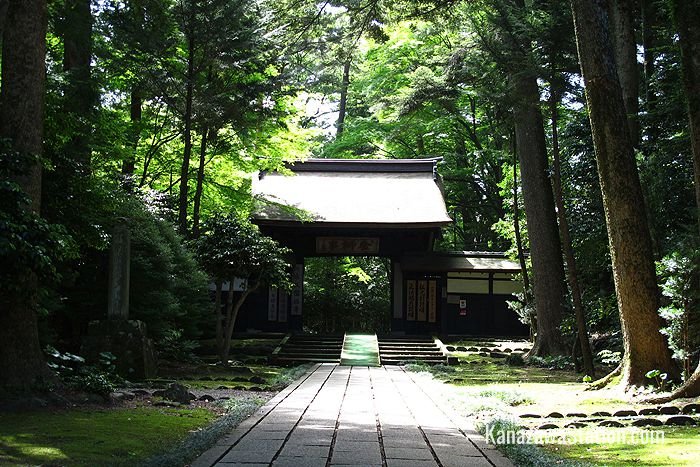
The Black Gate of Daijoji Temple
The History of Daijoji
Daijoji’s early history is recorded with slightly different dates. A common account places its first establishment in 1262 at a location to the south of Kanazawa in present-day Nonoichi City. Originally the temple belonged to the Shingon Buddhist sect but it became a Zen temple when Tettsu Gikai became its chief monk in 1293. Tettsu Gikai was an important spiritual leader of the Soto Zen religion which is the most common type of Zen Buddhism in Japan, and he spent the rest of his life at this temple. Over the centuries the temple was destroyed by war, and then rebuilt in Kanazawa, moving again to its present location in 1697. Daijoji remains an important Soto Zen temple with a traditional temple layout, quiet wooded grounds, and a zazen hall that is opened for public zazen meetings and training sessions.
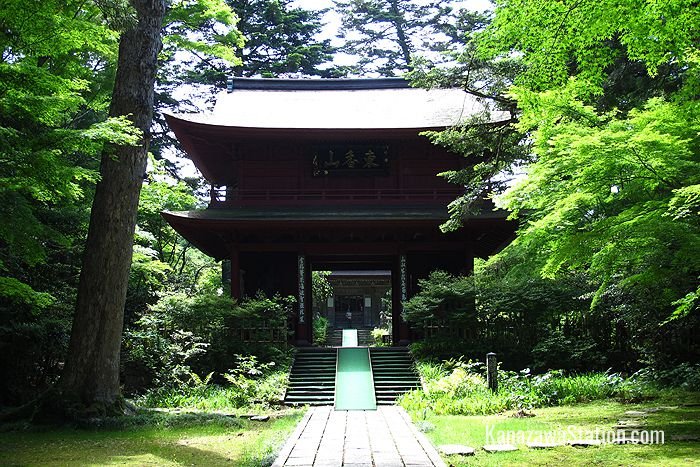
The Red Gate
What is Zen?
Zen is a style of Buddhism that originated in China and first came to Japan in the 12th century. In Zen Buddhism the most important practice is a type of meditation called Zazen. Meditation is seen as a way to understand yourself better. When you understand yourself better, you can improve your daily life and behavior and work for the benefit of others.
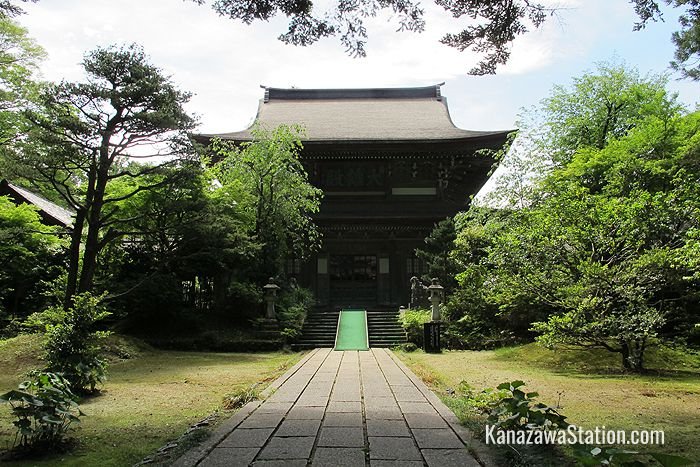
The Buddha Hall
How to Meditate
Meditation is a proven tool for managing stress, and improving concentration, and it is fairly easy to do. The three most important points to remember are posture, breath, and focus.
- Sit comfortably with a straight back and relax your neck and shoulders.
- Breath deeply and slowly.
- Focus on your breath coming in and out of your body.
And that’s it! You will have distracting thoughts, but that’s ok. All you need to do is return to focusing on your breath.
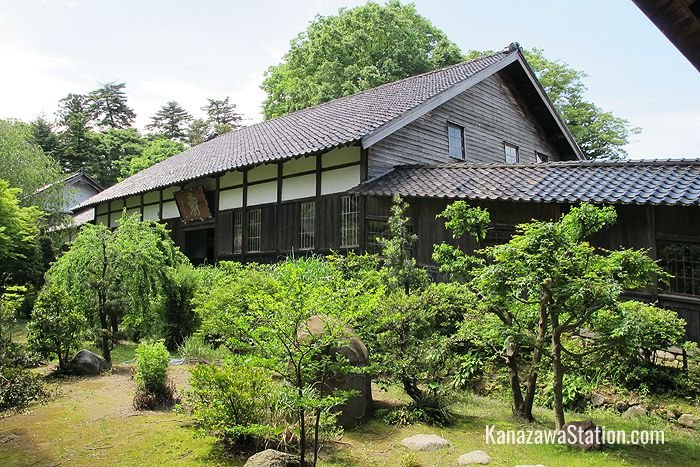
A sign in the meditation hall reads, “Please close the doors to keep out the bears”
Zen Practice at Daijoji
Those looking for more formal Zen training can find it at Daijoji. Here it is possible to join zazen sessions held at the temple. Morning zazen begins at 4.30am, but visitors should check the temple’s guidance before attending. The temple also accepts weekday, reservation-required zazen experience groups, usually for a 30 minute session with instruction from a monk.
On Sundays there is a public zazen meeting from 13.30 to 15.00, with reception from 13.00 to 13.30. Reservations are not accepted and places are first-come, first-served. First-time participants are asked to watch the temple’s zazen instruction video before coming and to be in the reception room by about 13.10. The regular schedule includes zazen and a Buddhist talk at 15.00, but the talk may not be held and the meeting may be changed or canceled for temple services or events, so check the event calendar before going.
For the full Zen experience short stays at the temple are also possible. Overnight zazen training is available by advance reservation for up to three nights and four days. Participants follow a training-style temple schedule, including zazen, services, cleaning, and other temple tasks.
The Happiness Bell
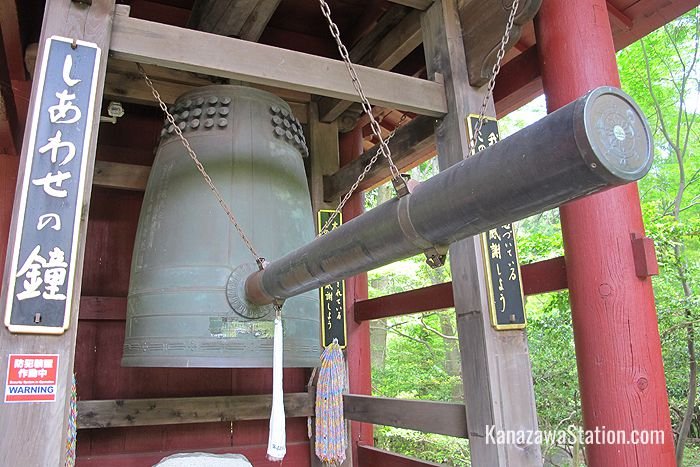
The happiness bell
By the temple’s Red Gate you will find the happiness bell. You can strike the bell and pray for happiness. This is how you do it.
- Face the bell and bow with your hands together in prayer.
- Take hold of the rope with both hands.
- Swing the rope lightly twice and on the third swing strike the bell.
- While the bell is ringing put your hands together and pray for happiness.
- Bow to the bell to say thank you!
Access
From Kanazawa Station, take a Hokutetsu route bus toward the south side of the city and get off at Nagasakadai or Heiwa-machi. From either stop it is about a 15 to 20 minute walk to Daijoji. By taxi or car, the trip from Kanazawa Station takes about 25 minutes. Check the Hokutetsu timetable and fare search before traveling, because buses are local routes and fares vary by route and stop.
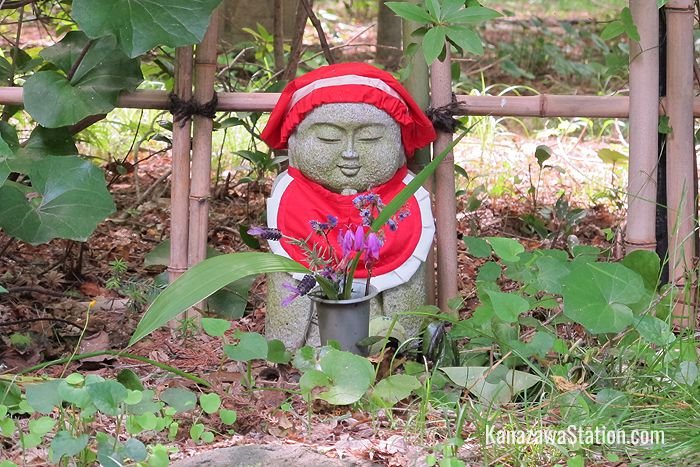
A bouquet for Jizo, the Buddhist patron saint of children and travelers
Telephone enquiries in Japanese can be made to the temple at: 076-241-2680.
For email or form enquiries, use the official contact details on the temple website.
Article and original photos by Michael Lambe. All rights reserved. Last updated 22-May-2026.