Noh drama is a classical form of Japanese theatre that is marked by heavily stylized performances, hypnotic music, and richly ornamented costumes. This drama has a long history in Kanazawa where it received much patronage from the ruling Maeda family and has historically been popular with all classes of people, whether aristocrats, merchants, or the common working people. Kanazawa even developed its own school of Noh called “Kaga-Hosho” which continues to flourish today.
For beginners the Kanazawa Noh Museum provides an excellent introduction to this fascinating theatrical form. However, there really is nothing better than going to see a performance for yourself. Ishikawa Prefectural Noh Theatre is located in the center of Kanazawa and has regularly scheduled weekend performances throughout the year.
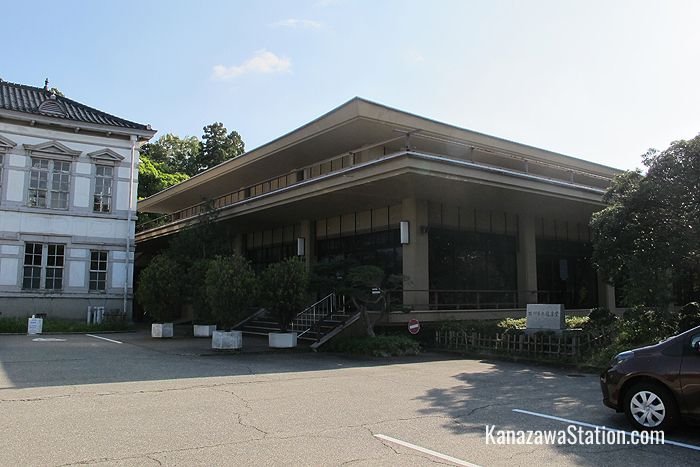
The entrance to Ishikawa Prefectural Noh Theatre
How to Enjoy Noh
Usually when you go to a Noh theatre you will be treated to a program of two or three Noh plays interspersed with one or two Kyogen style comedies and maybe some Noh dance performances too. The Kyogen comedies are usually a lot easier to follow than the Noh performances. Because the intention of Kyogen comedies is to make the audience laugh, the actors’ speech is clearer, and the actions and situations more exaggerated. Noh plays however, can be overwhelming for a beginner as they are so very unlike Western style dramas. A typical Noh play features lengthy poetic monologues in old fashioned language which are chanted by masked characters in heavy costumes. These monologues will be interspersed with elegant dances to haunting but repetitive music. For all these reasons it is not unusual for even regular Noh theatre goers to fall asleep. To avoid falling into a slumber it is a good idea to prepare yourself by reading the story of the play in advance. If you are familiar with the story then you will be enthralled by the expressive nature of the masks and dances, the spectacle created by the beautiful costumes, and the mysterious atmosphere created by the music.
The excellent website The Noh has an extensive and free stock of both full plays and play synopses in both English and Japanese, as well as theatre schedules for Noh performances around Japan. For performances in Kanazawa, check the official Ishikawa Prefectural Noh Theatre schedule first, as ticket prices and purchase methods vary by performance. You can also ask at the Tourist Information Center or ask your hotel concierge for help with schedules and tickets.
The theatre’s main stage was built from cypress wood in 1932 for the former Kanazawa Noh Theatre and later moved to this building.
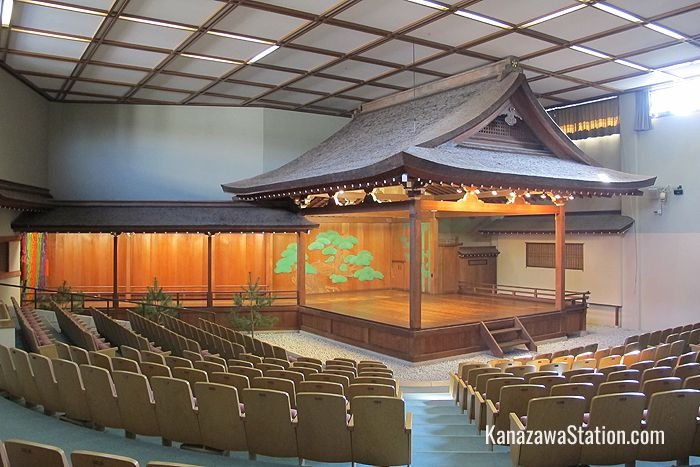
The Noh theatre stage was built from cypress wood in 1932
Noh Theatre Tours
When the auditorium is not being used for performances or rehearsals, visitors can sign in at reception and view the main stage for free. Individual visitors do not need a reservation, but they view the stage from the auditorium rather than going onto the stage. Group tours are also free but require advance contact, and some group plans may include backstage areas or the main stage when available. As most of the staff at the theatre do not speak English, it is a good idea to bring a Japanese speaker with you or contact the theatre in advance.
Access
Ishikawa Prefectural Noh Theatre is located to the south of Kenrokuen Garden and is very close to both Ishikawa Prefectural History Museum and Ishikawa Prefectural Museum of Art. From Kanazawa Station’s Kenrokuen Gate bus terminal, take a Hokutetsu bus from bus stop #6 and get off at Dewa-machi; the theatre is about a 3 minute walk from the stop. Another easy option is to use the Kanazawa Loop Bus from bus stop #7 and walk from the Hirosaka / 21st Century Museum or Kenrokuen Garden / Kanazawa Castle area. The Loop Bus flat fare is 220 yen for adults and 110 yen for children. A taxi from Kanazawa Station’s Kenrokuen Gate taxi stand takes about 10-15 minutes. Here is a map of its location.
Open: 9.00 – 22.00
Open for tours: 9.00 – 17.00 (last entry at 16.30)
Closed: Mondays, national holidays except Culture Day, and from December 29th to January 3rd.
Article and original photos by Michael Lambe. All rights reserved. Last updated 02-Jun-2026.